How to make your own private, enshittification-proof social media feed with RSS

Inspired by tech researcher Molly White's guide to curating your own enshittification-proof newspaper with RSS.
Australia's world-first social media age ban is just around the corner, set to begin on 10 December 2025.
But despite the dangers of age verification to everyone's privacy, risks of further endangering children's safety, a High Court challenge, and a recent Senate inquiry recommending a six month delay to the ban's implementation, communications minister Anika Wells MP has made it clear the Albanese government will not budge on the new laws.
"We will not be intimidated by threats. We will not be intimidated by legal challenges. We will not be intimidated by big tech. On behalf of Australian parents, we stand firm," Wells said during Question Time on 26 November 2025.
Social media platforms do pose a serious threat to everyone's safety, not just children's, so it's a no brainer that most adults support the ban, according to polls. But those risks stem largely from the exploitation of private user data for profit, and requiring users to prove they're over the age of 16 by handing over even more personally identifiable information to platforms seemingly contradicts Parliament's intention to address online safety.
That's because children's safety – everybody's safety, in fact – isn't profitable, and we're living through what science fiction author, activist and journalist Cory Doctorow describes as "mass, end-stage platform decay" or, as it's more fondly known, the Great Enshittening.
The Great Enshittening
Doctorow first coined the term 'enshittification' in late 2022 to describe how platforms die.
1. First, platforms are good to their users.
2. Then they abuse their users to make things better for their business customers.
3. Next, they abuse those business customers to claw back all the value for themselves.
4. Finally, they have become a giant pile of shit.
Sometime before the word 'doomscrolling' was invented, social media platforms were pretty good. I only saw posts from the pages I followed or my friends interacted with, the ads weren't too bad, mis- and disinformation weren't yet endemic, and there was no AI slop in sight.
None of that holds true today.
"We're all living through the enshittocene, a great enshittening, in which the services that matter to us, that we rely on, are turning into giant piles of shit," says Doctorow.
"It's frustrating. It's demoralizing. It's even terrifying."
But there is a way out. An easy one, in fact: RSS.
What is RSS?
RSS, or Really Simple Syndication, is an old school internet protocol that produces web feeds that push out website updates as they're published.
Using an RSS feed reader, or a news aggregator, users can keep track of feeds from any site that supports it, and many websites do. This means that you can follow news outlets, blogs, podcasts, and social media pages from all over the web, all from the one app.
No ads. No algorithms. No accounts. It's just you and your RSS reader, and you're the one in control.
"Using RSS to follow the stuff that matters to you will have an immediate, profoundly beneficial impact on your own digital life – and it will appreciably, irreversibly nudge the whole internet towards a better state," says Doctorow.
Step 1: Pick an RSS feed reader
There are tons of options out there for mobile, desktop and browser RSS readers, both free and paid, with different features and varying degrees of privacy preservation. Pick one you like and try it out. It really doesn't matter which reader you go with, because RSS is a protocol and doesn't lock you into any services. You can easily switch to another reader at any time.
I've tried NetNewsWire for iOS and Feeder for Android, and I like them both. Both are free and open source, and come recommended by many in the online privacy community.
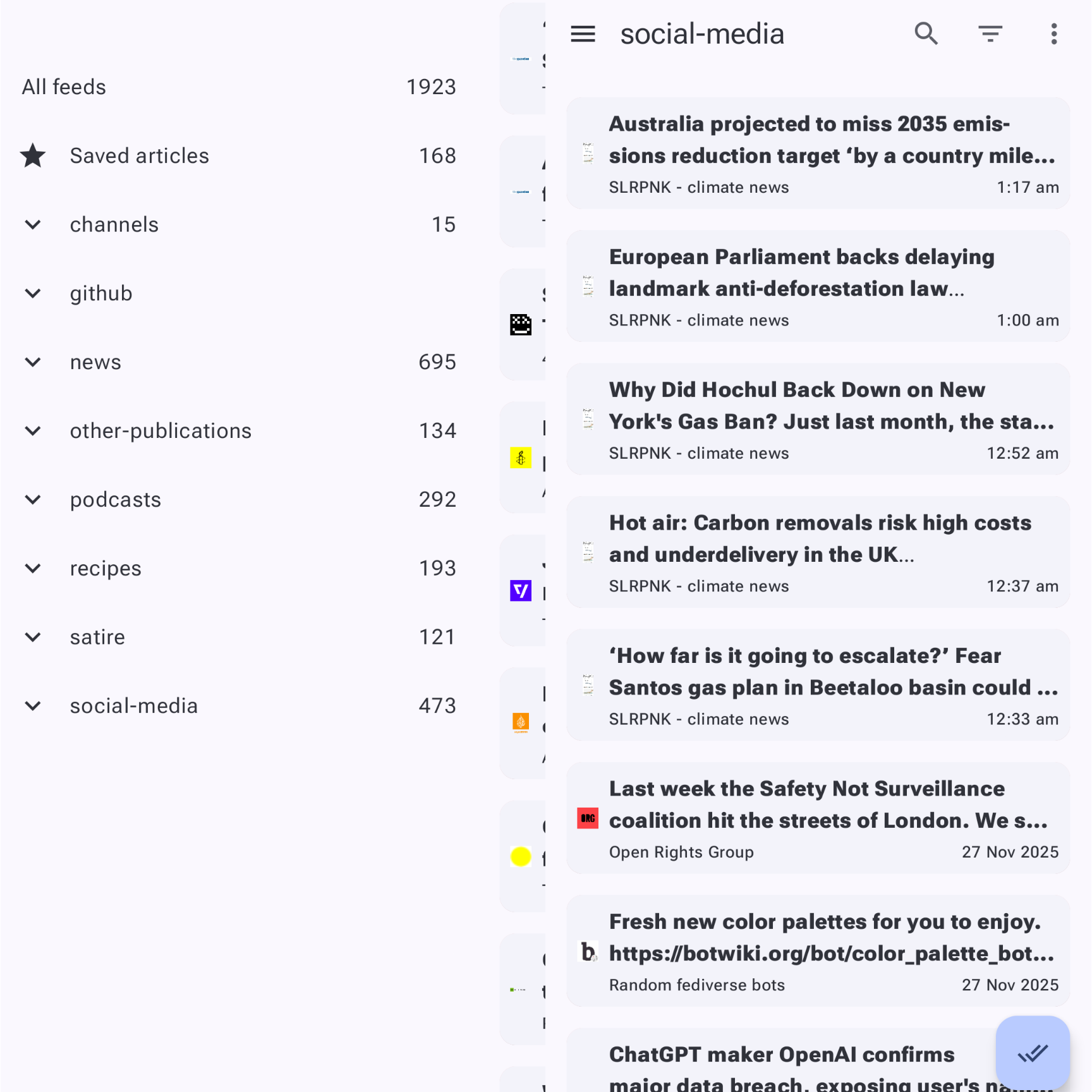
Step 2: Curate your feed
Mastodon and Bluesky
Microblogging platforms Mastodon and Bluesky are interoperable alternatives to Twitter.
You can follow public accounts on both, but I've found Mastodon posts show up better in my RSS reader. When people I follow cross-post on both platforms, I tend to go with their Mastodon account. Regardless, this isn't really an issue because you can easily click through to view posts directly on the platform's website (public content on most servers isn't locked behind a registration wall), where you can also see comments and read threads in the order they were intended.
To follow an account on Bluesky or Mastodon, copy the profile's link into your RSS reader and the app should parse the site to find the feed for you. Alternatively, you can add .rss to the end of a Mastodon profile's link, and /rss for Bluesky profiles.
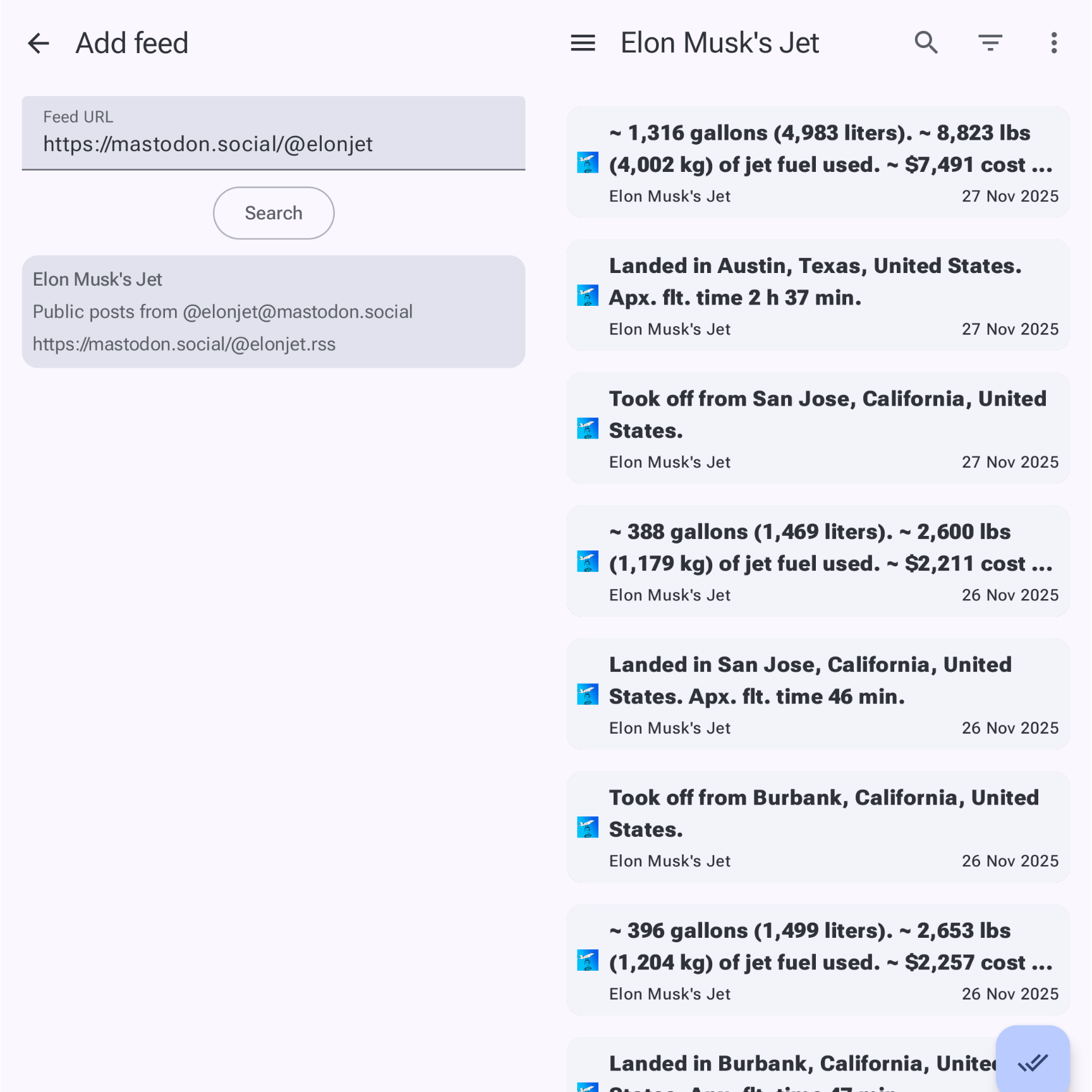
To follow a hashtag on Mastodon, pop .rss at the end of the tag's link and add it to your reader.
Reddit and Lemmy
Link aggregator Reddit and its Fediverse counterpart Lemmy both support RSS.
Lemmy makes it easy to follow communities, with RSS links available at the top of the page. For example, the RSS link for the meme community on slrpnk.net (a Lemmy instance for the Solarpunk movement) looks like this: https://slrpnk.net/feeds/c/memes.xml?sort=Active
For Reddit, just add .rss to the end of a subreddit's link before adding it to your reader.
YouTube
YouTube doesn't appear to support RSS feeds, but you can actually find a channel's feed pretty easily in the page's source code.
If you pull up any video from a channel you want to follow (this doesn't work from the channel's page itself), right click and select "view page source". From there, use CTRL-F to search for the "channelid".
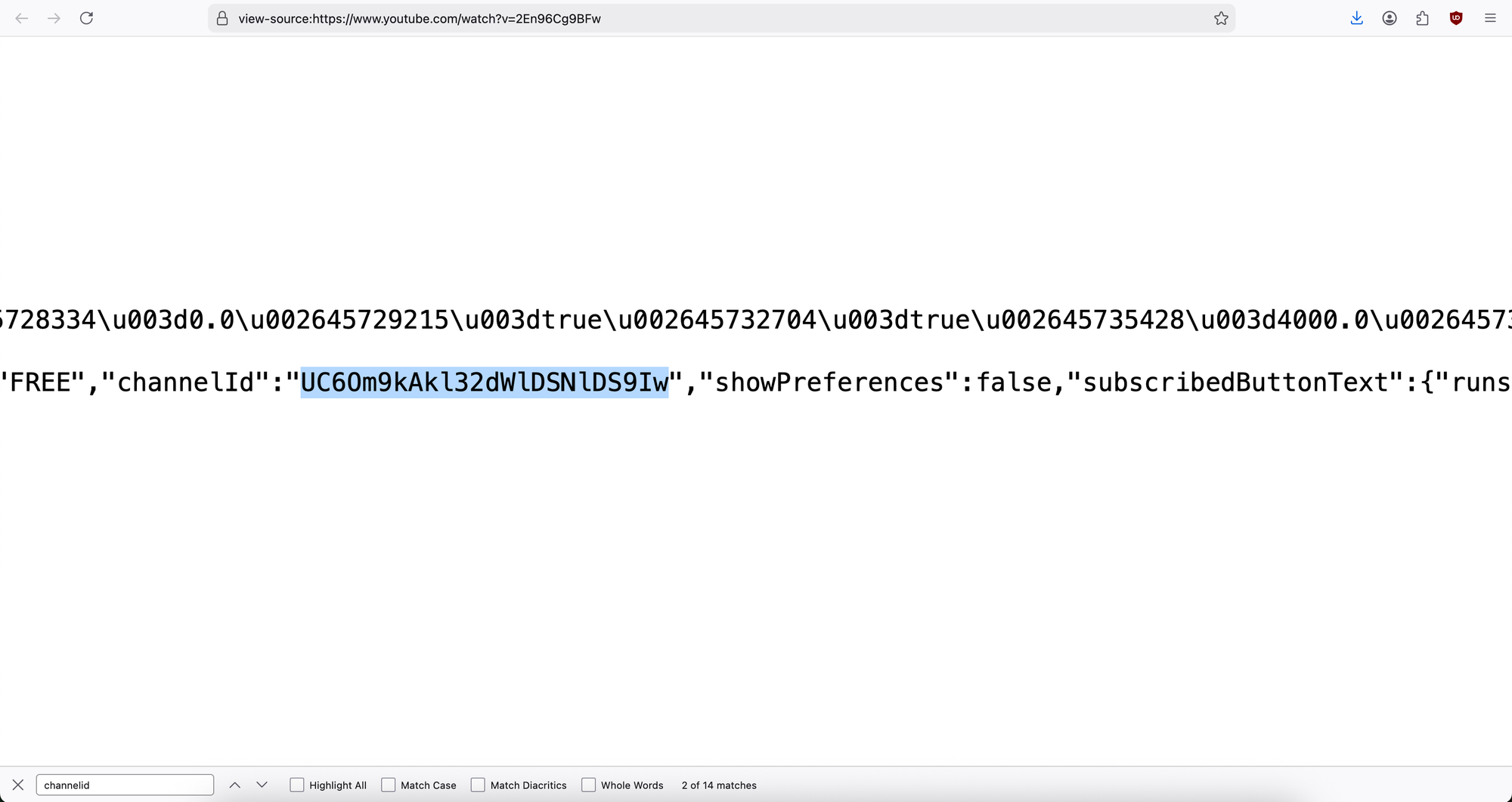
Copy the channel ID (the highlighted text in the above image, without the quotation marks), and paste it at the end of this link: https://www.youtube.com/feeds/videos.xml?channel_id=
To follow a Pinterest user, add /feed.rss to the end of their profile's link. For example: https://au.pinterest.com/bakerita/feed.rss
To follow a Pinterest board from your RSS reader, just add .rss to the end of the link, like this: https://au.pinterest.com/bakerita/vegan-bean-recipes.rss
Tumblr
To follow a Tumblr blog, simply add /rss to the end of the link, like this: https://writing-prompt-s.tumblr.com/rss
Resisting enshittification
An RSS revival is just one way to 'disenshittify' our access to online content, preserve our privacy and protect our sanity, but it's also a one way street.
Most people don't stay on corporate social media platforms because they want to. They stay because we've been forced to rely on them to maintain access to our communities, because that's what enshittification does.
The fight for a better internet has to be a collective one, and so while we can't resist against enshittification on our own, Doctorow says we can do it together.
"If you turn your personal campaign to live an enshittification-free life into a set of rigid practices that isolate you from your community, you will be miserable – and you will undermine your ability to address the systemic roots of enshittification.
"That's because systemic problems have systemic solutions. They are addressed through mass movements, impact litigation, political action, street uprisings, mutual aid, and other forms of solidarity and community."
And, as Doctorow puts it in An Audacious Plan to Halt the Internet’s Enshittification and Throw It Into Reverse:
"It’s time to stop trying to make the tech giants better, and to start evacuating them and letting them burn."
Further reading
Cory Doctorow, 'You should be using an RSS reader' (16 October 2024) Pluralistic.
Molly White, 'Curate your own newspaper with RSS' (31 July 2025) Citation Needed.
Member discussion